
Walk into any major supermarket in the UK today, and you will see a miracle of logistics. You can buy strawberries in December. You can find Peruvian asparagus next to Kenyan green beans. You can buy tomatoes that look perfectly red, regardless of the fact that there is frost on the ground outside.
But just because we can eat everything all year round, doesn't mean we should.
We have lost touch with the rhythm of the seasons. Those strawberries in December? They likely taste like watery cotton wool. Those tomatoes? They have travelled thousands of air miles just to sit blandly in your salad.
At Bitte.uk, we believe that food tastes best when it is eaten at the right time. "Eating seasonally" isn't just a buzzword for hipster cafes; it is a smarter, cheaper, and tastier way to live.
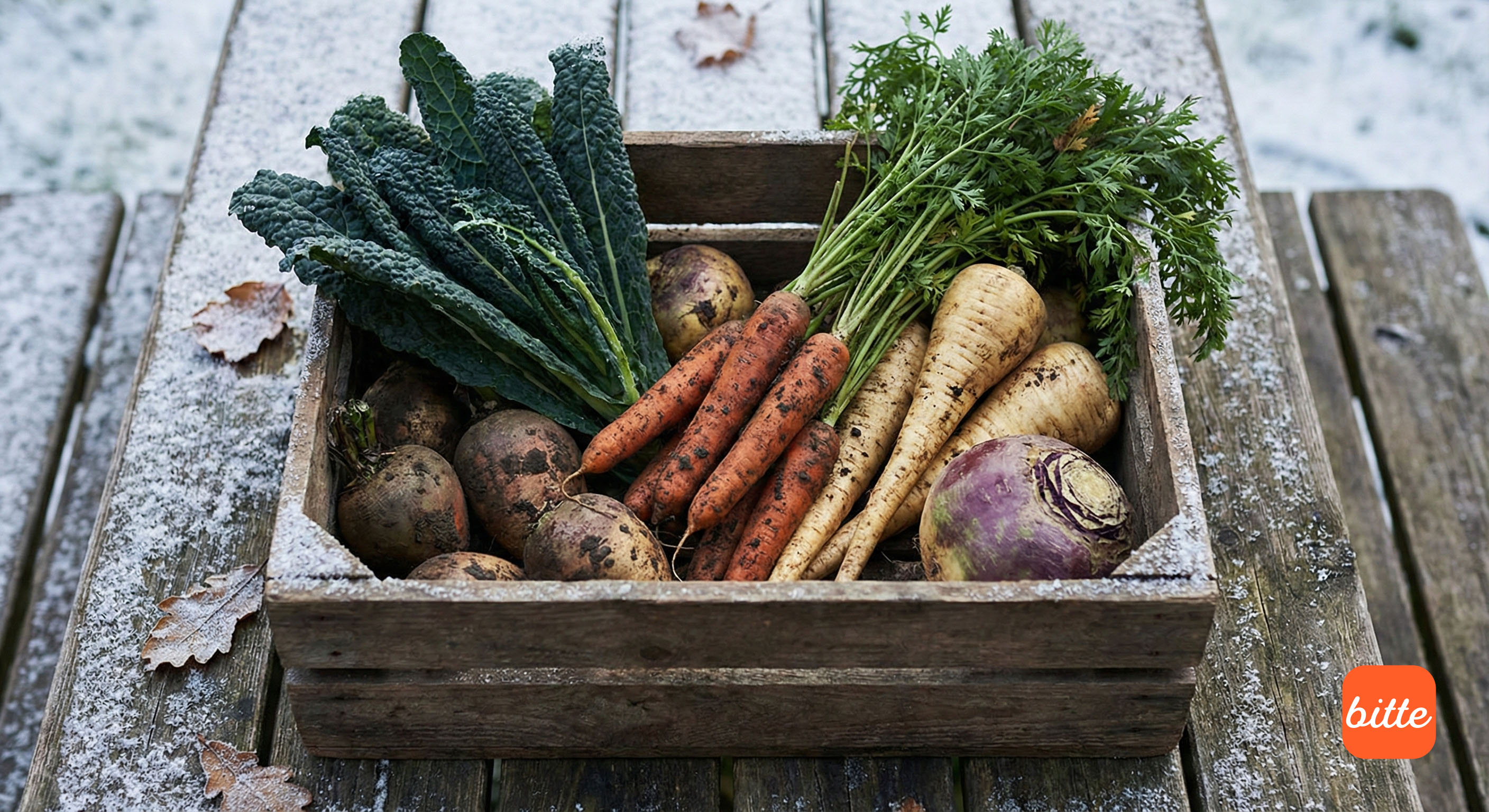
As we settle into the chill of the British winter, let’s take a look at what our local soil is actually producing right now. Put down the imported peppers, and let’s celebrate the unsung heroes of the UK winter harvest.
Why Bother With Seasonal Eating?
Before we get to the shopping list, let’s talk about why this matters.
1. Flavour is King Vegetables that are grown in their natural season and allowed to ripen fully before being picked simply taste better. A parsnip dug up from the cold British earth in December is sweet and nutty. A parsnip imported in July is woody and dry. Nature knows what it’s doing.
2. It saves you money When a vegetable is in season, it is abundant. Farmers have a lot of it, which drives the price down. If you are buying asparagus in winter, you are paying a premium for the air freight and the scarcity. Eating seasonally is one of the easiest ways to slash your grocery bill (or your takeaway costs).
3. It helps the planet Flying food halfway around the world leaves a massive carbon footprint. By eating root vegetables grown in Lincolnshire or kale from Scotland, you are drastically reducing "food miles."
The Winter Stars: What to Eat Right Now
So, what is good in the UK right now? The winter months (December, January, February) are the time for "comfort crops." These are hardy vegetables designed to survive the cold, which makes them perfect for warming stews, roasts, and soups.
Here are the VIPs (Very Important Plants) of the season:
1. The Parsnip (The Winter Candy)
The parsnip is perhaps the most magical winter vegetable. Did you know that parsnips actually need the cold to taste good? When the temperature drops and the ground freezes, the parsnip converts its starches into sugars to stop itself from freezing solid. Why eat it now: This natural antifreeze mechanism means parsnips harvested after the first frost are incredibly sweet. How to eat it: Roast them with honey and thyme. Don't boil them to death!
2. Brussels Sprouts (Give Them a Chance)
Poor sprouts. They have a terrible reputation, mostly because generations of British cooks boiled them until they were grey and smelled like old socks. Why eat it now: They are a member of the brassica family and are at their peak right now. How to eat it: Treat them with respect. Slice them in half and pan-fry them with bacon and chestnuts. Or roast them until they are crispy. A properly cooked sprout is nutty and delicious, not soggy.
3. Kale and Cavolo Nero
While delicate lettuces die in the frost, Kale stands tall. It is the ultimate superfood, packed with iron and vitamins to help you fight off that winter cold. Why eat it now: It is one of the few greens that thrives in the UK winter. How to eat it: Massage it with olive oil for a raw salad, or sauté it with garlic and chilli as a side dish for your Sunday roast.
4. Swede (Neeps)
Often confused with the turnip, the Swede is a larger, yellow-fleshed root vegetable that is a staple in Scotland (often served with Haggis). Why eat it now: It is incredibly cheap and filling. How to eat it: Mash it with plenty of butter and black pepper ("Clapshot"). It’s a sweeter, earthier alternative to mashed potatoes.
5. Leeks
The national emblem of Wales is a winter warrior. Leeks add a sweet, oniony depth to winter dishes without the harshness of a raw onion. Why eat it now: They are hardy and stand up well to the wet British weather. How to eat it: Potato and Leek soup is the ultimate winter warmer. It’s cheap, creamy, and comforting.
6. Celeriac
It wins the prize for the "ugliest vegetable." It looks like a brain from a sci-fi movie. But underneath that knobbly, muddy skin lies a flesh that tastes like a subtle mix of celery and parsley. Why eat it now: It’s a root veg hero. How to eat it: Make a "Celeriac Remoulade" (raw slaw with mustard mayo) or mash it.
The "Hungry Gap" is Coming
Eating seasonally also teaches us to appreciate abundance. Right now, we have plenty of roots. But in late Spring, the UK enters what farmers call the "Hungry Gap"—the period when winter crops are finished but new spring crops haven't started yet.
By feasting on what is available now, we connect with the natural cycle of the land. We learn to look forward to the first asparagus of April or the first strawberries of June, rather than taking them for granted.
How Does This Relate to Takeaways?
You might be thinking, "This is a blog for a delivery app. Why are you telling me about raw turnips?"
Because the best food delivery comes from restaurants that care about ingredients.
When a local restaurant uses seasonal produce:
Their food tastes fresh, not frozen.
They can keep their prices fair because they aren't buying expensive imported goods.
They support the local economy.
When Bitte.uk launches, we will be championing the local heroes. We want to highlight the pizzerias using British mozzarella, the burger joints pickling their own winter cucumbers, and the vegan spots making incredible curries with roasted butternut squash instead of imported veg.
A Challenge for Your Week
This week, we challenge you to try one new seasonal vegetable. Walk past the shiny imported peppers. Pick up that weird-looking Celeriac or that muddy bag of Parsnips.
Google a recipe. Roast it. Make a soup.
Reconnect with the season outside your window. It might be cold and dark out there, but the food has never been warmer.
Stay Warm and Eat Well.
Want to know which local restaurants are using the best fresh ingredients? Join the Bitte.uk community today. We are building a platform for food lovers who care about quality.
Join the Waitlist (Sign up and get our "Winter Comfort Food" guide when we launch!)
Share